


Which midsize truck rides smoother around Waukesha, WI — the 2026 Honda Ridgeline or the 2026 Chevrolet Colorado?
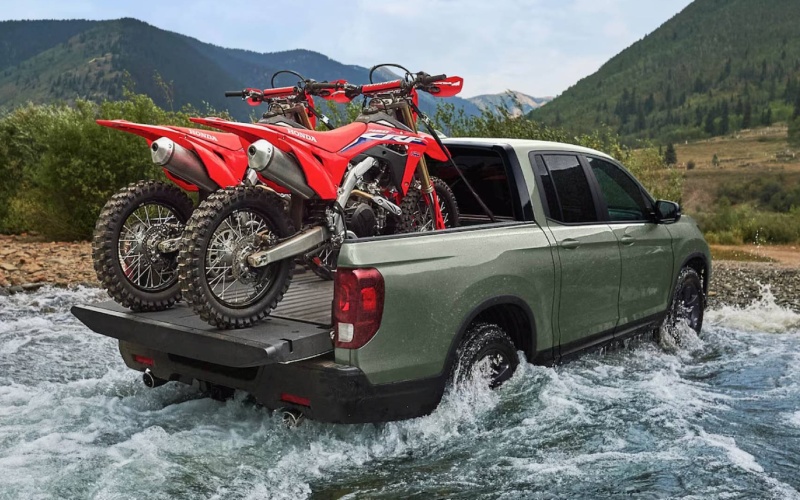
Russ Darrow Honda – Which midsize truck rides smoother around Waukesha, WI — the 2026 Honda Ridgeline or the 2026 Chevrolet Colorado?
What shoppers really want to know
When drivers ask which midsize truck feels smoother around Waukesha, WI, the conversation quickly centers on suspension design, cabin isolation, and how each truck handles the city-to-suburb rhythm. The 2026 Honda Ridgeline and the 2026 Chevrolet Colorado are both strong contenders, yet they approach ride quality differently. One prioritizes car-like composure without sacrificing capability; the other leans into traditional truck toughness with impressive towing available.
This deep-dive focuses on a single, highly searched question—ride smoothness—while anticipating the related points you’ll wonder about next: cabin noise, day-to-day traction, and how the chassis behaves on patched boulevards and rolling county roads.
Unibody vs body-on-frame: how the foundation shapes feel
It starts with the frame. Ridgeline uses a unibody construction and fully independent suspension front and rear. That architecture helps it shrug off broken pavement with a controlled, single-piece feel—less shudder and fewer secondary motions after bumps. The 2026 truck’s tuning keeps the cabin calm over expansion joints and mid-corner heaves, which is noticeable on routes like Moreland Boulevard or Sunset Drive where surface quality can vary block to block.
Colorado’s body-on-frame layout pairs an independent front suspension with a solid rear axle. That setup brings notable durability and payload friendliness, especially in trims tuned for rugged work or off-road use. The trade-off, compared to Ridgeline, is a bit more body-on-frame “conversation” over chatter bumps and sharp impacts. It’s not harsh—especially in higher trims—but you’ll likely feel the difference back-to-back if ride polish is your top priority.
AWD behavior and real-world traction
Beyond springs and dampers, traction strategies influence confidence on slick or uneven surfaces. Ridgeline’s standard i-VTM4® AWD can actively distribute torque side-to-side across the rear axle, effectively helping the truck turn in and track through corners, even if the surface is damp. Intelligent Traction Management adds Snow, Sand, and Mud modes to tailor responses for specific conditions.
Colorado counters with multiple drive modes—up to five are available depending on trim—and an available two-speed transfer case in off-road models. Those features support low-speed control and terrain flexibility. For everyday street use, especially when roads are wet or lightly snow-covered, Ridgeline’s torque-vectoring behavior subtly enhances stability in ways you tend to notice most during quick merges or when rounding wide turns with confidence.
Cabin calm and technology can also sway your perception of ride quality. Ridgeline’s interior remains hushed on the highway, and amenities like Tri-Zone Automatic Climate Control and lift-up rear seats add to the “everyday ease” factor. Its 9-inch Display Audio supports wireless Apple CarPlay® and wireless Android Auto™, while the available Honda Satellite-Linked Navigation System™ helps when signal is spotty outside town.
Colorado’s large center display with Google built-in, Apple CarPlay® and Android Auto™ compatibility delivers robust connectivity. Available wireless charging, underbody cameras, and a variety of camera views further boost convenience for towing or trail scouting. Both trucks are admirably connected; the difference is how seamlessly the Ridgeline blends quiet refinement with features you’ll use on every drive.
When ride quality matters most around Waukesha
Think about how you’ll use the truck. If your weekdays mix school drop-offs, a quick run to a home center, then a commute on I-94 or Hwy 59, Ridgeline’s unruffled ride will likely rank higher on your must-have list. The fully independent suspension smooths out the rough stuff; the unibody keeps noise and vibration in check; and i-VTM4® AWD adds assurance when roads turn slick.
If you regularly tow closer to the limits of midsize capability or want a trim engineered for heavy-duty trails—where approach angles, lifts, and special dampers come into play—Colorado’s configurations open the door to those pursuits. It’s a matter of aligning your truck’s strengths with your everyday life.
Safety confidence supports relaxed driving too. Ridgeline includes the Honda Sensing® suite standard—Collision Mitigation Braking System™ (CMBS™), Road Departure Mitigation (RDM), Adaptive Cruise Control (ACC), and Lane Keeping Assist System (LKAS)—so highway miles feel more composed. Colorado’s Chevy Safety Assist is also standard with six advanced features, and additional tech is available by trim.
Ultimately, ride smoothness comes from structure, suspension, and how the AWD or 4×4 system manages traction across real streets with imperfect surfaces. Here, Ridgeline’s holistic approach to comfort builds a daily advantage you notice in the first few blocks—and appreciate even more after a long day.
- Ride character: Ridgeline’s unibody and fully independent suspension deliver calm, controlled motion; Colorado’s body-on-frame with a solid rear axle feels tougher but transmits a bit more impact chatter.
- Everyday traction: i-VTM4® AWD helps the Ridgeline feel planted on damp curves and slushy patches; Colorado’s modes and available 4×4 hardware shine in rugged or heavy-towing use cases.
- Cabin experience: Ridgeline prioritizes quietness and convenient features like Tri-Zone Automatic Climate Control and lift-up rear seats; Colorado counters with a tech-forward cockpit and Google built-in.
If your top question is ride smoothness around Waukesha, WI, the Ridgeline earns the nod for its poised composure, minimal head toss, and confident, torque-vectoring AWD feel during quick maneuvers and lane changes.
For shoppers broadening the search across the area, our team is committed to clear, side-by-side guidance, serving Greenfield, Waukesha, and West Bend. One test drive in each tells the story—how a chassis settles after a bump, how the steering loads up in a fast sweeper, and how refreshed you feel when you step out at the end of the day.
Frequently Asked Questions:
Which truck is quieter on the highway?
Both control wind and road noise well, but Ridgeline’s unibody and cabin isolation often feel calmer at cruising speeds, especially on concrete sections with expansion joints.
Does the Ridgeline feel stable in rain or light snow?
Yes. Standard i-VTM4® AWD and Intelligent Traction Management lend steady, predictable responses in slippery conditions without requiring driver intervention beyond mode selection.
If towing is my priority, does Colorado have an edge?
If you routinely tow near the top of midsize limits, Colorado’s available configurations offer higher maximum ratings. For mixed hauling—small boats, pop-up campers, landscaping gear—Ridgeline’s integrated hitch, smooth 9-speed, and confident AWD are an easy fit.
Which cabin feels more accommodating for families?
Ridgeline’s spacious second row and 60/40 lift-up rear seats make quick work of strollers, tall boxes, or sports bags you want to keep secure. Colorado’s cabin is comfortable and tech-forward, with strong connectivity and storage solutions.
Can I test both on similar roads to compare ride feel?
Absolutely—take the same loop with a mix of neighborhood streets and freeway miles. Notice how each truck settles after bumps, tracks through on-ramps, and manages lane changes at speed.
When you’re ready to experience the difference firsthand, schedule a drive, ask about routes that highlight ride nuances, and bring along the gear you haul most. A real-world loop reveals more than specs alone. For guidance built around your needs, connect with the team at Russ Darrow Honda.
0 comment(s) so far on Which midsize truck rides smoother around Waukesha, WI — the 2026 Honda Ridgeline or the 2026 Chevrolet Colorado?